
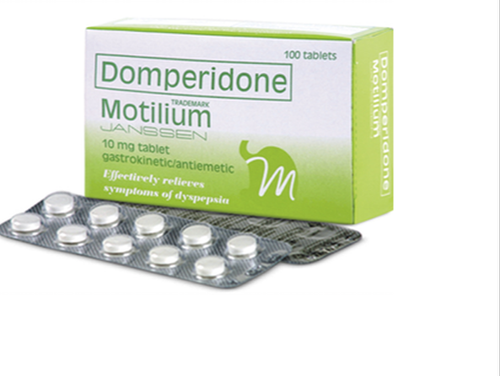
Domperidone 10 mg: frequently marketed under the brand name Motigut, is a potent pharmacological agent used to regulate the upper digestive system. It serves two primary roles: as an anti-emetic (to stop vomiting) and as a prokinetic (to speed up the movement of food through the stomach).
1. Pharmacology: How It Works
Domperidone is a dopamine receptor antagonist. This is a significant medical advantage, as it avoids most of the neurological side effects like “shaking” or restlessness common in other treatments.
Gastrokinetic Action: It blocks dopamine receptors in the stomach and intestines. This prevents dopamine from slowing down the gut, effectively increasing the strength and frequency of stomach contractions.
Anti-Emetic Action: It blocks dopamine at the Chemoreceptor Trigger Zone (CTZ). This area of the brain is responsible for triggering the urge to vomit.
2. Clinical Indications: Why It’s Prescribed
Doctors prescribe Motigut 10 mg for a variety of conditions related to “gastric stasis” (where the stomach doesn’t move food efficiently):
Nausea and Vomiting: Effective for nausea caused by migraines, dietary indiscretion, or viral infections.
Gastroparesis: A condition where the stomach empties too slowly, common in patients with diabetes.
Dyspeptic Symptoms: Relief from bloating, a feeling of “excessive fullness” after small meals, and abdominal discomfort.
Parkinson’s Support: It is used to counter the nausea side effects of dopamine-boosting drugs like Levodopa.
3. Dosage and Administration
For the safest and most effective results, Motigut should be taken precisely as directed:
Timing: Take 15 to 30 minutes before meals. If taken after food, the absorption is delayed.
Standard Adult Dose: 10 mg (one tablet) up to 3 times daily.
Maximum Daily Dose: Do not exceed 30 mg per day. In the past, higher doses were used, but modern safety regulations have lowered the limit to protect heart health.
Duration: Generally prescribed for the shortest time possible, typically not exceeding 7 days.
4. Safety Profile and Side Effects
While Motigut is generally well-tolerated, it does have a distinct profile of potential side effects.
Common Side Effects
Dry mouth (the most frequent report).
Headaches or dizziness.
Temporary diarrhea or abdominal cramps.
Hormonal Effects
Breast tenderness or enlargement (Gynecomastia in men).
Unexpected milk flow (Galactorrhea).
Changes in menstrual cycles.
Serious Warnings: The Heart
The most critical safety concern with Domperidone is its effect on the heart’s electrical rhythm, specifically QT prolongation.
Seek immediate medical help if you experience palpitations, fainting, or a very fast/irregular heartbeat while taking this medication.
Risk is significantly higher for those over 60 years old or those taking more than 30 mg daily.
5. Who Should NOT Take Motigut?
You should avoid this medication if you have:
Heart Conditions: Congestive heart failure or known rhythm issues.
Liver Disease: Moderate to severe hepatic impairment.
Internal Bleeding: Any signs of stomach or intestinal bleeding (such as black, tarry stools).
Pituitary Tumors: Specifically a prolactin-releasing tumor (prolactinoma).
Electrolyte Imbalances: Low potassium or magnesium levels in the blood.
6. Drug Interactions
Domperidone can interact dangerously with other drugs that affect heart rhythm or liver processing. Avoid taking it with:
Antifungals: Ketoconazole or Fluconazole.
Antibiotics: Erythromycin or Clarithromycin.
Certain Antidepressants and anti-psychotics.
Grapefruit Juice: This can increase the level of the drug in your blood to dangerous levels.
7. Summary Quick-View
| Feature | Information |
| Drug Class | Dopamine Antagonist / Prokinetic |
| Typical Dose | 10 mg, 3 times a day |
| Best Taken | On an empty stomach (30 mins before food) |
| Primary Risk | Heart rhythm changes (QT prolongation) |
| Storage | Store below 30°C in a dry place |
FAQs
Motigut 10 mg কী এবং এটি কী জন্য ব্যবহৃত হয়?
Motigut, যা Domperidone নামে পরিচিত, একটি প্রোকিনেটিক ও এন্টি-এমেটিক ওষুধ। এটি বমি থামাতে এবং খাবার পেটের মাধ্যমে দ্রুত চলতে সাহায্য করে।Motigut কীভাবে কাজ করে?
Domperidone ডোপামিন রিসেপ্টর ব্লক করে। পেট ও অন্ত্রের গ্যাস্ট্রিক কনট্রাকশন বাড়ায় এবং চেমোরিসেপ্টর ট্রিগার জোনে (CTZ) ডোপামিন আটকিয়ে বমির ইচ্ছা কমায়।Motigut 10 mg কখন এবং কিভাবে খাওয়া উচিত?
- প্রতি খাবারের ১৫–৩০ মিনিট আগে একটি 10 mg ট্যাবলেট জলসহ খাওয়া সবচেয়ে ভালো। দিনে সর্বাধিক ৩ বার খাওয়া যায়।
Motigut 10 mg এর সাধারণ পার্শ্বপ্রতিক্রিয়া কী?
শুকনো মুখ, মাথা ঘোরা, হালকা ডায়রিয়া, পেটের খিঁচুনি, স্তনের সংবেদনশীলতা বা স্তন বৃদ্ধি, অপ্রত্যাশিত দুধ প্রবাহ বা মাসিক পরিবর্তন হতে পারে।
Motigut কে ব্যবহার করা উচিত নয়?
হৃদরোগ, লিভারের সমস্যা, অন্ত্রের রক্তপাত, প্রোল্যাক্টিন টিউমার, বা শরীরে ক্যালিয়াম/ম্যাগনেশিয়ামের ঘাটতি থাকলে ব্যবহার এড়াতে হবে।Motigut গ্রহণের সময় কোন ওষুধ বা খাবার এড়ানো উচিত?
কেটোকোনাজল, ফ্লুকোনাজল, এরিথ্রোমাইসিন, ক্লারিথ্রোমাইসিন, কিছু অ্যান্টিডিপ্রেস্যান্ট ও অ্যান্টিসাইকোটিক এবং গ্রেপফ্রুট জুসের সাথে ব্যবহার করা উচিত নয়।Motigut দীর্ঘমেয়াদী ব্যবহার কি নিরাপদ?
সাধারণত ৭ দিনের বেশি ব্যবহারের জন্য নয়। দীর্ঘকাল ধরে বা ৩০ mg এর বেশি ব্যবহার করলে হার্টের ঝুঁকি বাড়তে পারে।
Motigut গ্রহণের সময় কোন হালকা বা গুরুতর সতর্কতা আছে?
হৃদস্পন্দন দ্রুত বা অস্বাভাবিক হলে, হঠাৎ মাথা ঘোরা বা বমি হলে অবিলম্বে ডাক্তারকে জানান। ৬০ বছরের ঊর্ধ্বে বা উচ্চ ডোজে ঝুঁকি বেশি।
Motigut ব্যবহার করে গর্ভধারণ বা স্তন্যদান করা সম্ভব?
গর্ভাবস্থায় বা স্তন্যদানকালে ব্যবহার করার আগে অবশ্যই ডাক্তারকে পরামর্শ নিতে হবে।
Motigut সংরক্ষণ কিভাবে করবেন?
ওষুধকে ৩০°C এর নিচে, শুকনো এবং অন্ধকার স্থানে রাখুন। শিশুর নাগালের বাইরে রাখুন।